
Breakfast cereal applications
Loose granola manufacturing technologies
Coperion offers fully integrated loose granola production systems designed to deliver consistent mixing and controlled baking while preserving product texture and integrity.
How to reliably achieve the right granola texture when manufacturing at scale
Achieving the right balance between mixing, baking, and kibbling is essential in loose granola manufacturing. It determines whether clusters form with the right size, texture, and consistency, while maintaining product integrity throughout handling and packaging.
Unlike compressed bars, loose granola develops its structure during baking. As moisture is removed and sugars melt, the ingredients bind together naturally, creating the signature crunch and golden color expected in high-quality granola.
In order to produce premium blends or seasonal products, new ingredients like dried fruits, nuts, seeds, or alternative sweeteners can be added to enhance product perception, which also introduces new challenges in mixing, baking, and cluster formation.
This is why when producing everyday cereal or premium blends, each manufacturing step plays an important role in delivering granola with the right texture, appearance, and quality batch after batch.
Integrated loose granola manufacturing systems
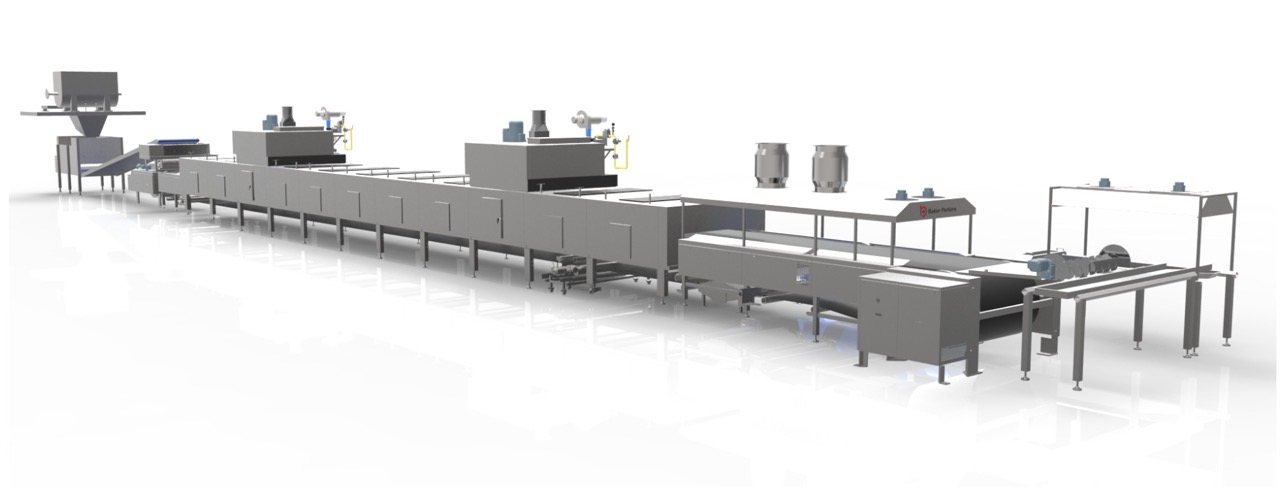
Coperion delivers complete process lines for loose granola manufacturing, covering every stage from mixing through to baking, cooling, and kibbling. Designed to operate as one continuous system, the line reduces manual handling and improves overall production efficiency.
This integrated approach supports a steady, controlled product flow and helps avoid common challenges such as uneven baking or inconsistent cluster formation. With better control over mixing, baking, and post-processing, manufacturers can produce granola with uniform clusters, consistent texture, and minimal fines, while keeping waste to a minimum.
The technology brands behind our loose granola solutions




How loose granola production works
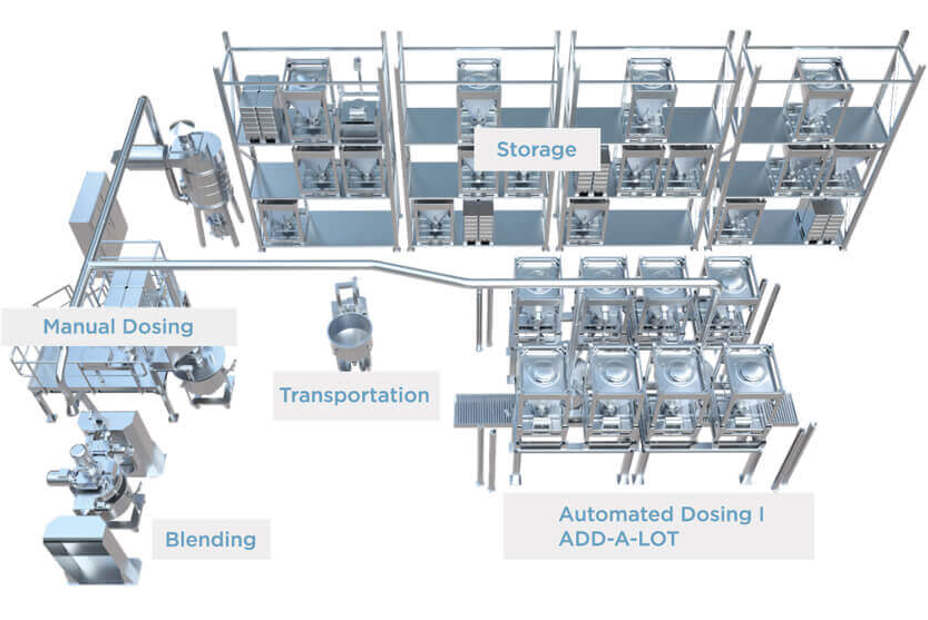
Ingredient handling
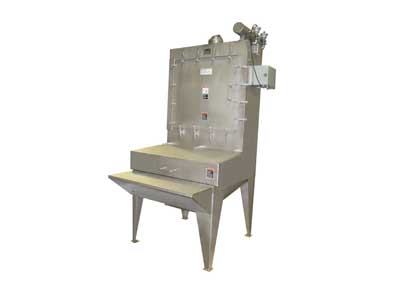
Shick Esteve Bag dump stations provide a safe, dust-free way to manually add dry ingredients.
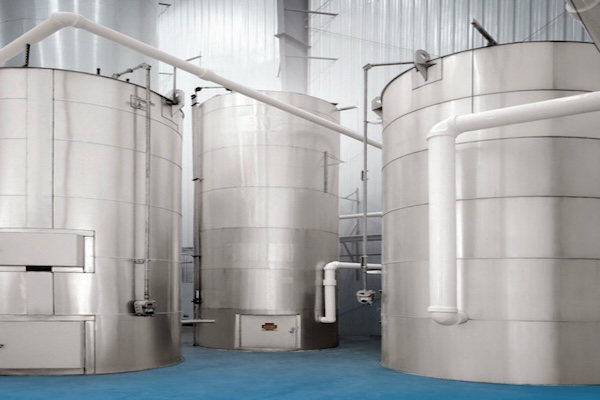
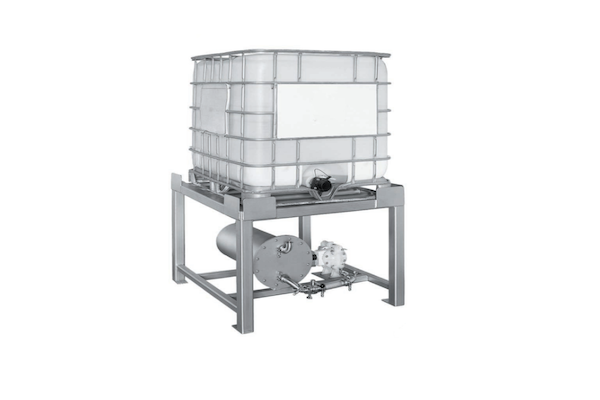
Liquid ingredients, such as glucose, are temporarily stored in our Shick Esteve Tank systems, or Tote systems, and then delivered through pumps.
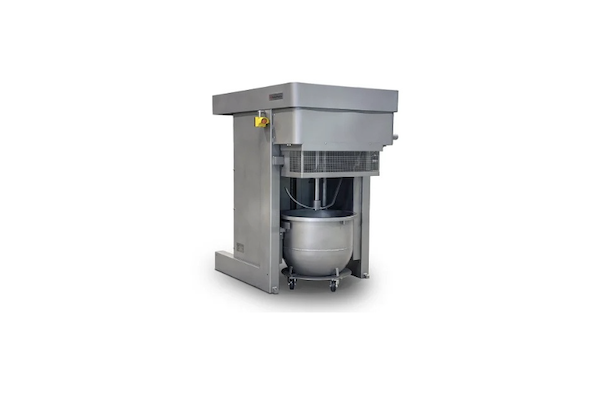
Mixing
The process begins by preparing and combining oats, oils, sweeteners, and inclusions into a consistent mixture.
Proper mixing is essential to ensure even coating of ingredients, which supports uniform baking and cluster formation.
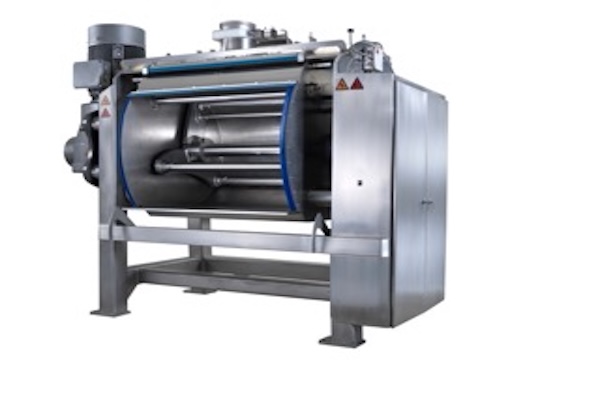
An oil heating and storage tank helps maintain the correct viscosity and temperature of liquid ingredients before dosing, ensuring smooth integration into the mix. The Baker Perkins Granola spiral mixer is designed to gently blend the ingredients, achieving a homogeneous mix while preserving the structure of inclusions such as nuts, seeds, or dried fruits.

Ingredient discharge
After mixing, the product is discharged into a Baker Perkins Live bottom bin, where it is held and fed forward at a controlled rate. This helps maintain a consistent supply to the forming line and prevents surging or gaps in the process.
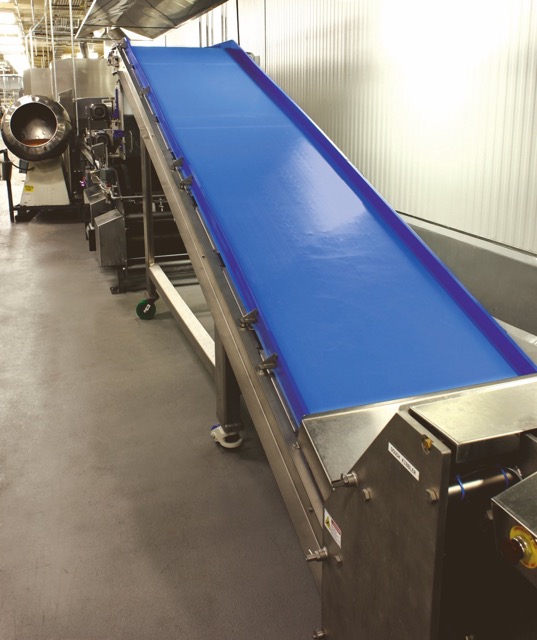
Feeding
Once mixed, the granola is transferred to the next stage in a controlled and continuous flow. Maintaining a consistent feed is important to support even distribution onto the oven band and stable downstream processing.
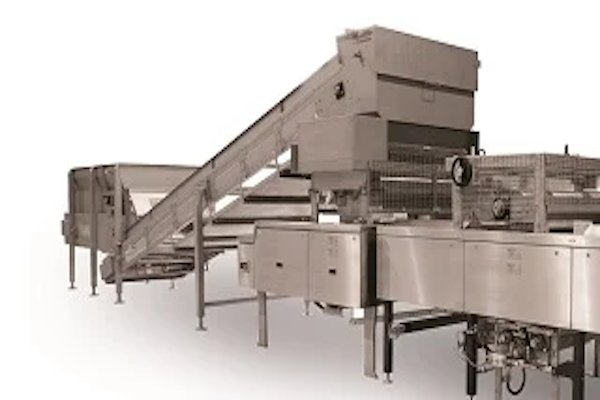
The Baker Perkins Spray bar discharge helps distribute the product evenly across the width of the line, preparing it for uniform baking. The Baker Perkins Elevated feed conveyor then gently transfers the granola to the baking stage, maintaining product integrity while ensuring a steady and reliable flow.
Forming
At this stage, the granola is distributed across the oven band to create a uniform product layer. Controlling bed depth is essential for consistent baking and cluster formation.
The Baker Perkins Feeder/spreader with grooved feed rolls or pins ensures even distribution of the product across the full width of the line, while gently conditioning the mixture without damaging inclusions.
The Baker Perkins Compression roll can be applied as required to level the product bed and control thickness, supporting uniform baking performance downstream.
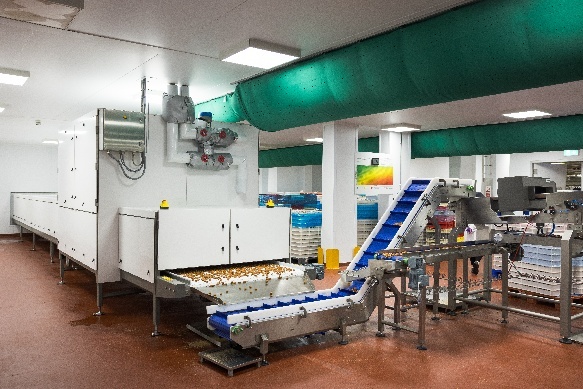
TruBake HiCirc Oven
Baking & cooling
At this stage, the granola layer is baked to develop its final texture, color, and cluster structure. Controlled heat transfer removes moisture while melting sugars, helping bind the ingredients and create the characteristic crunch.
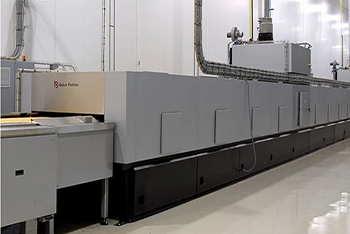
The Baker Perkins TruBake HiCirc oven delivers consistent airflow and temperature control across the full width of the oven band, ensuring even baking and uniform product quality.
An Baker Perkins Oven band washer supports hygienic operation by maintaining cleanliness of the baking band, helping ensure consistent performance and product quality over time.
After baking, the slab is cooled to stabilize the structure before further handling. This step allows the product to set, ensuring it is firm enough for accurate kibbling.
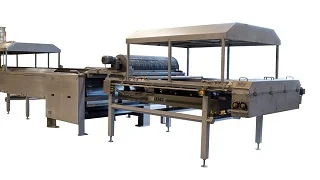
Breaking and kibble unit
Cutting
After baking and cooling, the granola sheet is reduced into clusters and prepared for final handling. Controlled breaking is important to achieve the desired cluster size while minimizing fines and maintaining product integrity.
A Baker Perkins Pre-breaking unit performs the initial reduction of the baked sheet into larger pieces. These are then transferred via a Baker Perkins Vibratory conveyor, which helps distribute the product evenly and remove excess fines.
Final sizing is achieved using a Baker Perkins Kibbling unit, which gently reduces the product into consistent clusters suitable for packaging or further processing.
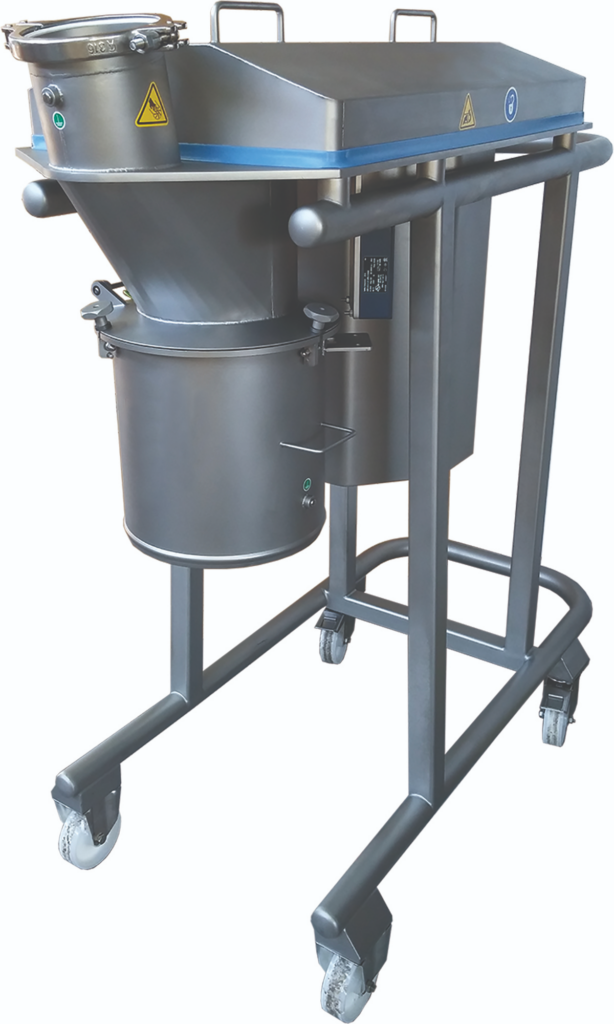
Option – Biscuit rework
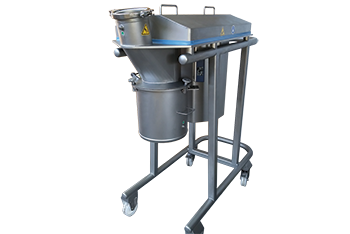
The biscuit rework process uses a Kemutec KEK Cone Mill to recycle broken or rejected biscuits by milling them into uniform crumbs for reuse in production.
Related process technologies
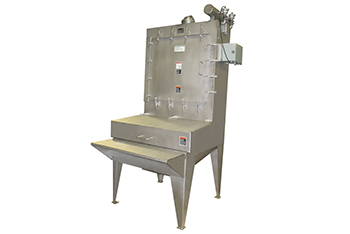
Related applications
Get in touch
We take a distinctive approach to the processes that drive manufacturing. Let us know how we can help you achieve your goals for efficiency, productivity and safety.